Late 1850s
First Discoveries
Prospectors working their way north from the California gold fields began
probing the mountains of southern Oregon. The first significant gold
discoveries in the Bohemia area are attributed to James "Bohemia" Johnson,
a colorful figure who allegedly named the district after his home country.
The rugged terrain — steep ridges, dense timber, and high elevation — made
early access difficult, but the promise of gold kept men coming back.
1860s–1880s
The District Takes Shape
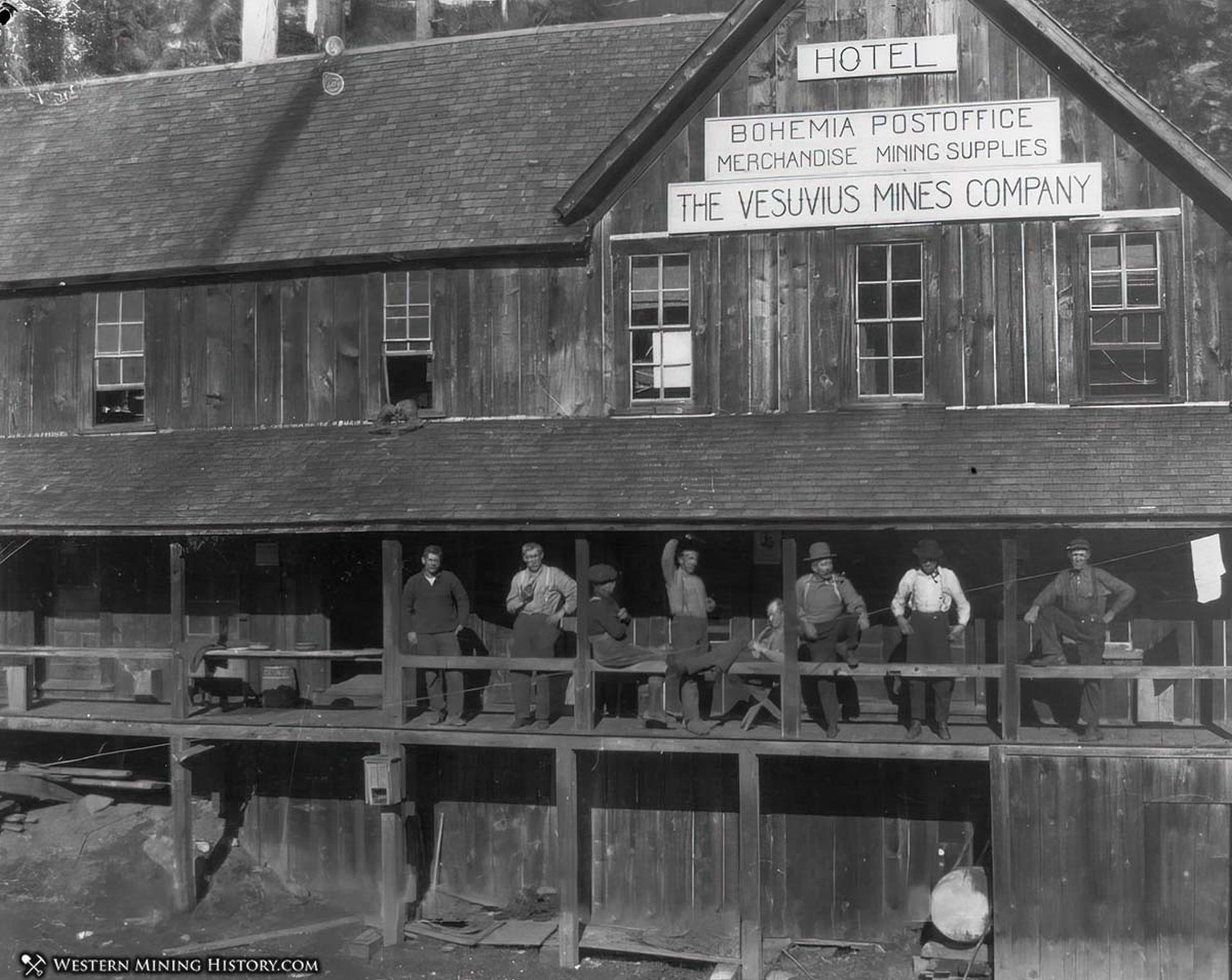
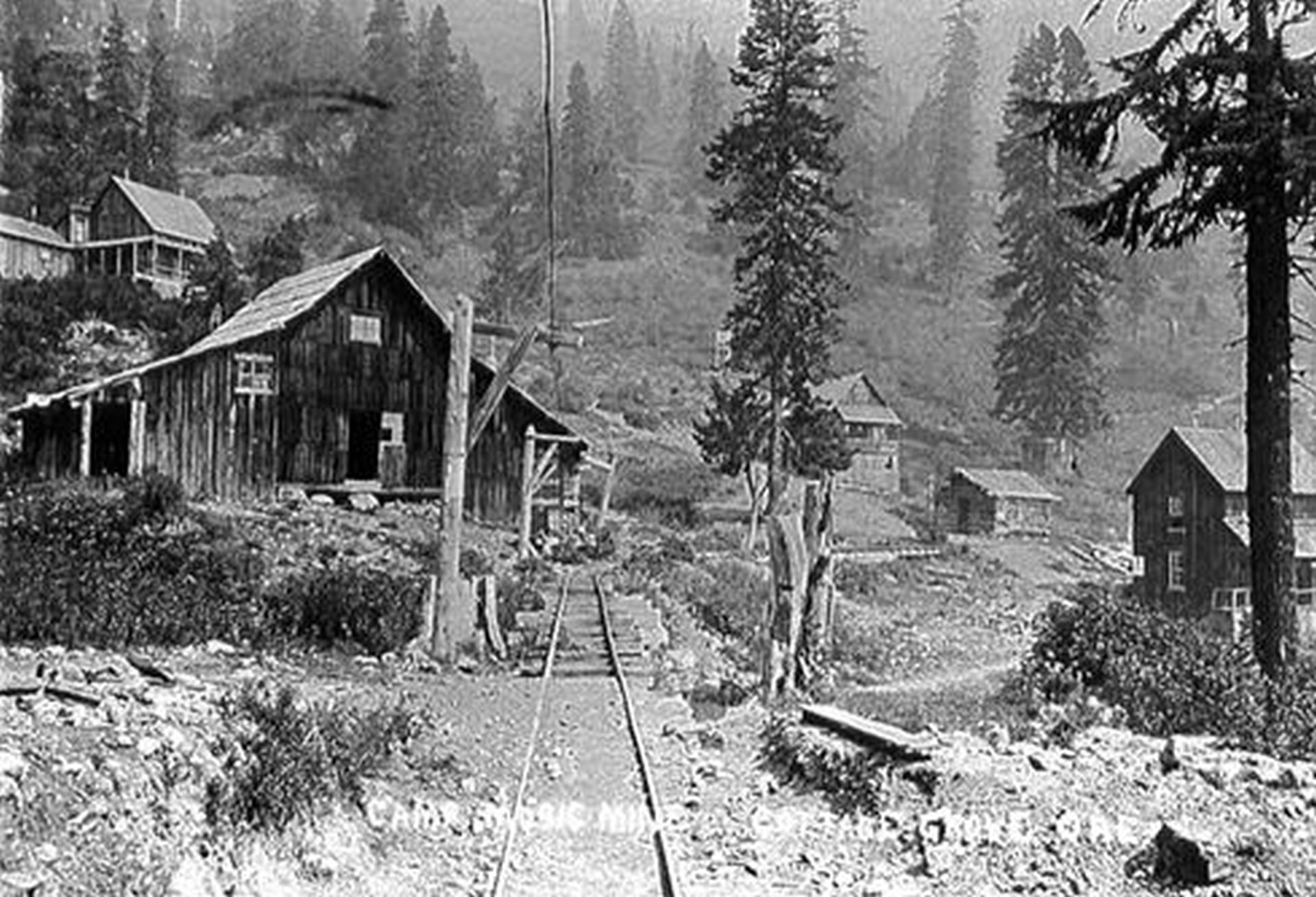
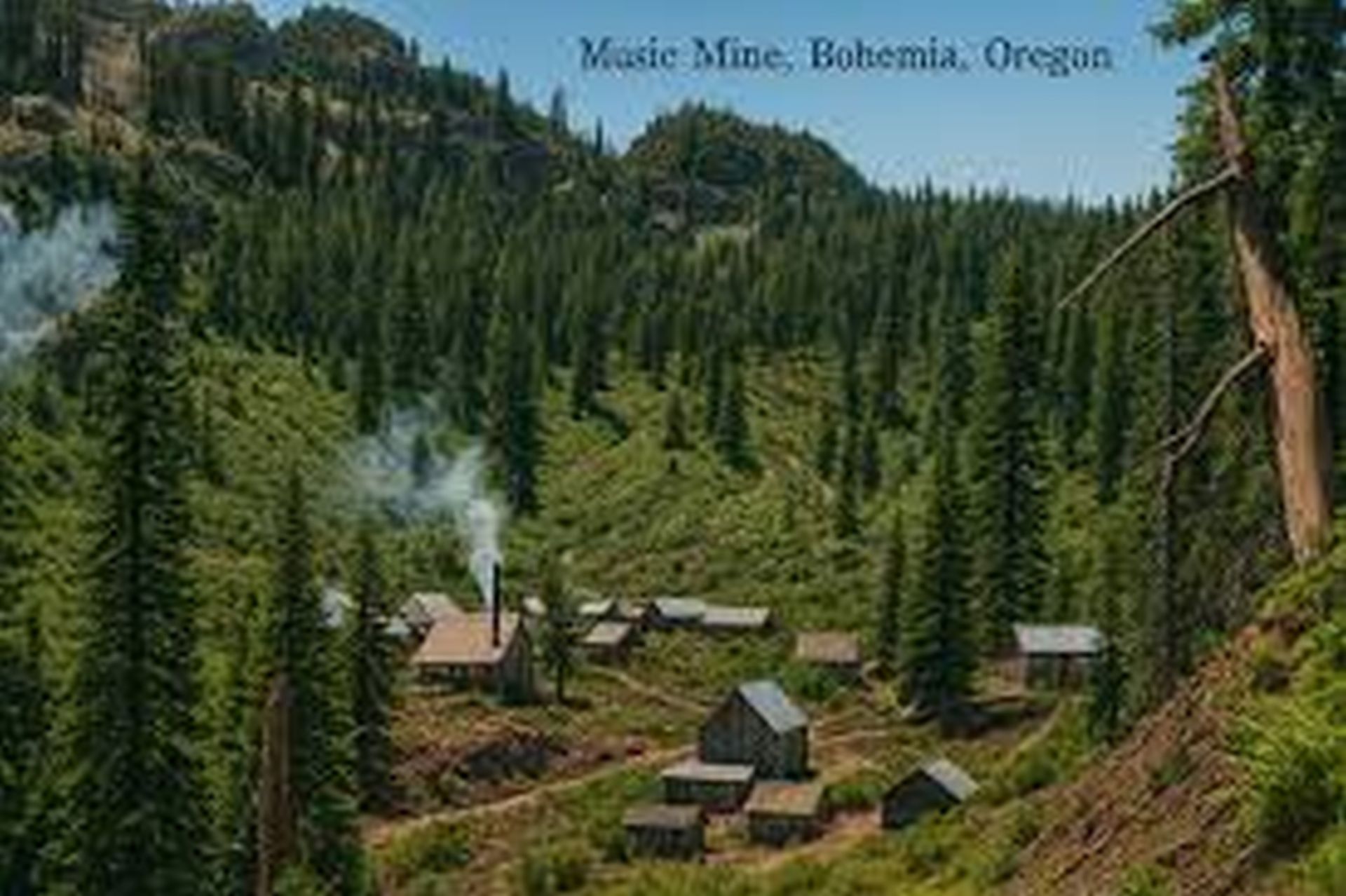
Hard-rock mining operations began in earnest as prospectors staked claims
on the quartz veins running through Bohemia Mountain and the surrounding
ridges. Several small towns and camps sprang up to support the miners,
though the remote location and lack of roads meant supplies were expensive
and winters brutal. The placer creeks — Brice Creek, Champion Creek, and
their tributaries — drew recreational and small-scale miners who worked the
gravels washing down from the lode deposits above.
1890s–1910s
The Champion Mine Era
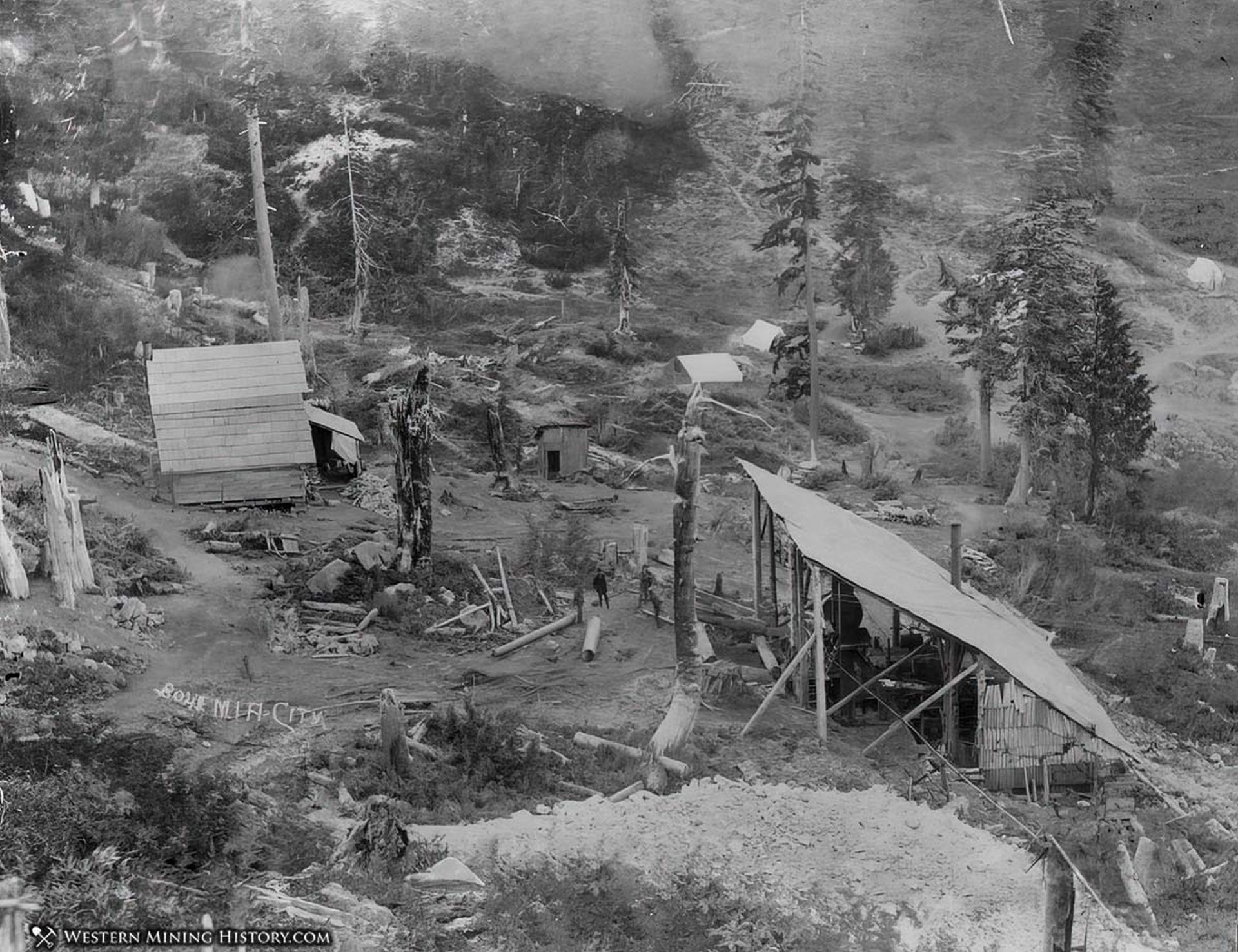
The Champion Mine on Bohemia Mountain became the defining operation of
the district. Capitalized with outside investment and equipped with
modern stamp mills, the Champion processed ore from multiple levels,
with adits at the 900 and 1,200-foot levels reaching deep into the
mountain. A secondary mill lower on the mountain — believed to be the
location of the Cupel Claim today — further concentrated the ore before
it was shipped out. The Champion was by any measure the most productive
mine in the history of the entire district, and its legacy is visible
in the geology of every creek below it.
1910s–1940s
Boom, Bust, and Persistence
Like most western mining districts, Bohemia rode the cycles of metal
prices, labor availability, and investor enthusiasm. Operations expanded
during World War I when strategic metals were in demand, then contracted
during the Depression years when the cost of mining outpaced the price
of ore. Small-scale placer miners — men working sluice boxes and pans
along the creeks — continued throughout this period, and some found
enough gold to sustain a simple living in the mountains.
1940s–Present
Recreational Mining Takes Over
Large-scale lode mining in the Bohemia District largely wound down by
mid-century, but the creeks never stopped producing. Today the district
attracts recreational gold prospectors from across the Pacific Northwest,
drawn by the history, the scenery, and the genuine possibility of finding
color — or more. Modern equipment like dredges, highbankers, and
recirculating sluices have made it possible to work ground that was
impractical for earlier miners, and the continued erosion from the old
mine workings above keeps fresh material moving into the creek systems
year after year.
Today
The Gold Is Still There
The Bohemia Mining District remains one of the most actively prospected
areas in Oregon. Both of our claims — the Cupel on Champion Creek and
Deep Down 2 on Brice Creek — sit in the productive zone below the
historic Champion Mine workings. The mountain continues to do what it
has always done: slowly, season by season, releasing the gold it has
held for millions of years into the creeks below.